As Featured In:







Small Bedroom Ideas That Maximize Space and Style
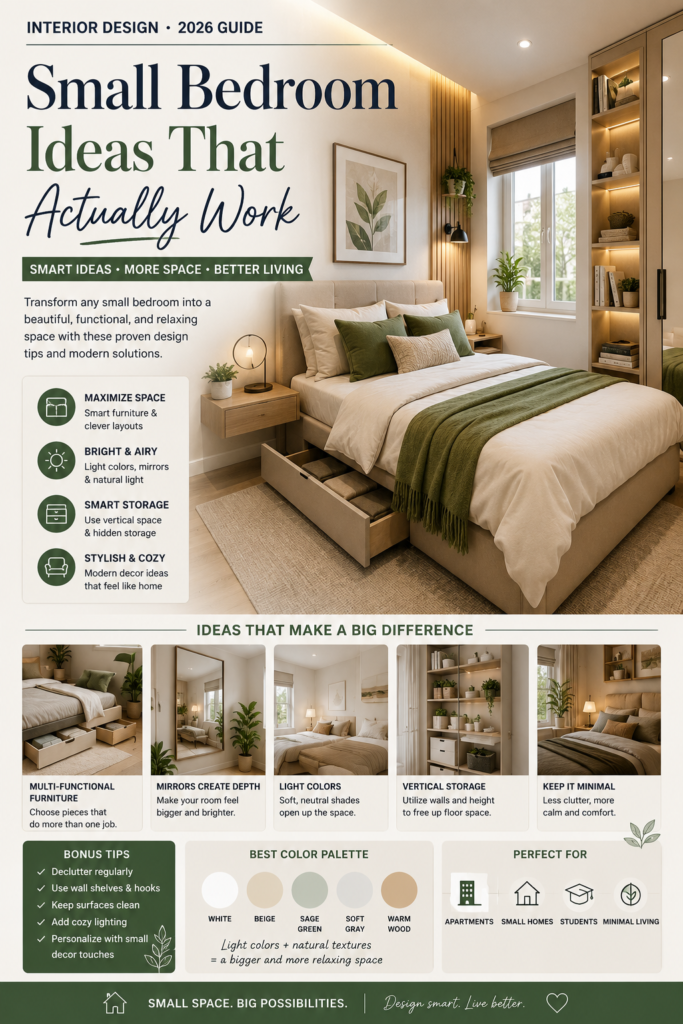
Small Bedroom Ideas That Maximize Space and Style (2026 Guide)
Meta Description:
Discover smart small bedroom ideas that maximize space and style. Learn practical design tips, storage hacks, and decor ideas to create a beautiful and functional bedroom.
Introduction
Living with a small bedroom can feel limiting, but the right design choices can completely transform your space. A compact room doesn’t have to feel cramped or cluttered. With thoughtful planning, clever storage solutions, and simple decor upgrades, even the smallest bedroom can feel stylish, comfortable, and spacious.
Whether you live in a studio apartment, dorm room, or a home with limited square footage, these practical small bedroom ideas will help you maximize every inch while creating a relaxing and beautiful environment.
Why Small Bedroom Design Matters
Your bedroom should be more than just a place to sleep—it should feel like a personal retreat. Poor layout choices can make a room feel smaller and stressful, while smart design can improve:
- comfort
- storage
- functionality
- visual appeal
- relaxation
A well-designed bedroom helps improve both your mood and your daily routine.
1. Use Multi-Functional Furniture
One of the best ways to maximize a small bedroom is by choosing furniture that serves multiple purposes.
Great examples include:
- beds with built-in storage drawers
- foldable desks
- ottomans with hidden storage
- bedside tables with shelves
- sofa beds
Multi-functional furniture helps reduce clutter while increasing usability.
Tip: A storage bed can replace an entire dresser in many small bedrooms.
2. Add Mirrors to Create Depth
Mirrors are one of the oldest and most effective interior design tricks for making small spaces feel larger.
How mirrors help:
- reflect natural light
- create visual depth
- brighten darker corners
- make ceilings feel taller
Place a large mirror opposite a window for the best effect.
Popular choices:
- full-length mirrors
- mirrored closet doors
- decorative wall mirrors
3. Choose Light and Neutral Colors
Color has a huge impact on how spacious a room feels.
Best colors for small bedrooms:
- white
- beige
- light grey
- soft blue
- pale green
These shades reflect more light and make walls appear farther apart.
Avoid using too many dark colors, as they can make the room feel enclosed.
Pro Tip: Add small pops of color through pillows, rugs, or artwork.
4. Use Vertical Storage
When floor space is limited, think upward.
Vertical storage ideas:
- floating shelves
- tall bookcases
- wall hooks
- over-the-door organizers
- hanging baskets
Using your walls efficiently frees up valuable floor space and keeps your room organized.
5. Declutter Regularly
No design trick works if your room is overcrowded.
Simple decluttering habits:
- donate unused clothes
- store seasonal items elsewhere
- use drawer organizers
- keep surfaces clean
A clutter-free room instantly feels larger and more peaceful.
6. Let Natural Light In
Natural light can make any room feel bigger and more welcoming.
Ways to maximize light:
- use sheer curtains
- avoid blocking windows
- keep window areas clean
- use reflective decor
If natural light is limited, use warm LED lighting to create a cozy atmosphere.
7. Keep Decor Simple and Intentional
Too many decorative items can overwhelm a small room.
Instead, focus on:
- one statement artwork piece
- simple bedding
- minimal accessories
- matching color themes
Minimalism often works best in smaller spaces.
Budget-Friendly Small Bedroom Upgrades
You don’t need a large budget to improve your bedroom.
Affordable upgrades:
- peel-and-stick wallpaper
- LED strip lights
- storage bins
- new throw pillows
- wall shelves
- under-bed organizers
Small changes can create a big visual impact.
Common Small Bedroom Mistakes to Avoid
Avoid these common errors:
- oversized furniture
- too many decorations
- poor lighting
- ignoring vertical space
- dark wall colors everywhere
Being intentional with design helps prevent wasted space.
Final Thoughts
A small bedroom doesn’t have to feel restrictive. With the right layout, storage solutions, and design choices, you can create a stylish, comfortable, and highly functional space.
Start with one or two simple changes—like adding vertical storage or using lighter colors—and build from there. Small improvements can lead to a dramatic transformation.
Small Bedroom Ideas That Actually Work (2026 Guide)
Meta Description: Discover smart small bedroom ideas that maximize space and style. Practical design tips, clever storage hacks, and decor ideas to create a bedroom that feels bigger than it is.
Introduction
Here’s a truth that most interior design guides won’t tell you upfront: square footage matters far less than you think. Some of the most beautiful, restful bedrooms in the world are also some of the smallest. What separates a cramped, frustrating room from a cozy, character-filled retreat isn’t size — it’s intention.
Whether you’re working with a studio apartment, a dorm room, or just a home where the bedroom drew the short straw on space, the right design choices can dramatically change how a room feels. This guide cuts through the generic advice and gets into what actually works — and why.
Why Small Bedroom Design Is Worth Getting Right
Your bedroom isn’t just where you sleep. It’s where you start and end every single day, and the way it’s designed has a measurable effect on your mood, your stress levels, and the quality of your rest. A poorly planned room — too cluttered, too dark, too cramped — can make you feel subtly anxious even when you can’t put your finger on why.
Get it right, and the opposite happens. A well-designed small bedroom feels intentional rather than constrained. It becomes a space you actually want to spend time in.
1. Choose Furniture That Does More Than One Job
This is the single highest-impact change you can make in a small bedroom. Every piece of furniture that earns its place by doing only one thing is a missed opportunity.
A bed with built-in storage drawers can easily replace an entire dresser — freeing up floor space that immediately makes the room feel more open. An ottoman at the foot of the bed looks polished while secretly holding off-season blankets or extra pillows. A bedside table with open shelving beats a closed nightstand because it doubles as a display surface and keeps the visual weight low.
The goal isn’t to stuff the room with multi-purpose gadgets. It’s to be ruthlessly selective: before any piece of furniture earns a spot, ask what it does beyond taking up space.
2. Use Mirrors More Strategically Than You Think
Mirrors in small spaces are practically a design cliché at this point — but they work, which is why designers keep recommending them. The key is placing them where they’ll do the most good.
A large mirror hung directly opposite a window doesn’t just reflect light — it creates the illusion of a second window, effectively doubling the perceived size of the room. Mirrored closet doors serve the same function while reclaiming visual space that solid doors would absorb. Even a smaller decorative mirror placed to catch a lamp’s glow can brighten a dark corner that otherwise makes the room feel closed in.
What to avoid: a single small mirror hung at head height with no thought given to what it reflects. If it’s bouncing back a blank wall, it’s not doing much for you.
3. Let Color Do the Heavy Lifting
Color is one of the cheapest and most powerful tools available to you — and in a small bedroom, your choices matter more than they would in a larger space.
Light, neutral tones (whites, warm beiges, soft greys, muted sage) reflect more light and push the walls back visually. Dark colors do the opposite. That doesn’t mean dark rooms are off-limits — a deep, moody bedroom can feel intentionally intimate rather than cramped — but it requires more careful layering of light sources and reflective surfaces to pull off.
The smarter approach for most small rooms: go light on the walls and ceiling, then add personality through textiles, art, and accessories. A terracotta throw pillow or a piece of warm-toned artwork gives a room character without making it feel smaller. It also means you can refresh the look entirely by swapping out a few accessories rather than repainting.
4. Think Vertically
When floor space is limited, the solution is almost always to look up. Walls are prime real estate that most people dramatically underuse.
Floating shelves are the obvious starting point — they add storage and display space without touching the floor. But the real trick is in how you arrange them. Shelves that run close to the ceiling draw the eye upward, making the room feel taller. A tall, slender bookcase does the same while keeping a small footprint. Over-the-door organizers on the back of the closet door can quietly absorb an impressive amount of clutter.
The principle is simple: every item that moves off the floor makes the room feel more spacious, even if the total amount of stuff stays the same.
5. Edit Ruthlessly and Often
No amount of smart design can compensate for too much stuff. This isn’t about adopting a minimalist lifestyle — it’s about acknowledging that visual clutter is exhausting, and small rooms are more susceptible to it than large ones.
A practical approach: once a season, spend twenty minutes going through your room with fresh eyes. What’s sitting on surfaces that doesn’t need to be there? What’s taking up closet space that you haven’t touched in a year? What’s been living on the floor because it doesn’t have a designated home?
Drawer organizers, labeled storage bins, and under-bed boxes aren’t glamorous, but they make editing much easier — because when everything has a place, clutter doesn’t accumulate as fast.
6. Treat Natural Light as a Design Element
Light is arguably the most underrated factor in how spacious a room feels. A bright room always feels larger than a dark one of the same dimensions, which means maximizing whatever natural light you have is a high priority.
Swap heavy curtains for sheer panels that filter light rather than blocking it. Keep window ledges clear — even a small plant or a stack of books can reduce the light coming in more than you’d expect. Glossy or reflective surfaces near windows (a lacquered side table, a metallic lamp base) bounce light further into the room.
If natural light is genuinely limited — a basement room, a north-facing window — warm LED bulbs and layered lighting can go a long way. A mix of overhead light, a bedside lamp, and a small floor or table lamp eliminates the flat, slightly institutional feel of relying on a single overhead fixture.
7. Decorate with Purpose, Not Volume
In a small bedroom, every decorative choice is more visible — which means bad choices are more visible too. A gallery wall crammed with mismatched frames, a bookshelf filled to overflowing, a collection of trinkets spread across every surface: these things work in a large, eclectic space and feel chaotic in a small one.
The more effective approach is to choose a few pieces that genuinely mean something to you and give them room to breathe. One large piece of art makes more impact than five small ones. A single interesting textile — a patterned throw, a textured rug — anchors the room without competing with everything else. Restraint isn’t about being boring; it’s about making the things you love actually visible.
Budget-Friendly Upgrades Worth Trying
You don’t need to redesign the entire room to make a noticeable difference. A few targeted changes — peel-and-stick wallpaper on a single accent wall, LED strip lighting behind the headboard, a new set of matching storage bins — can shift the feel of a room significantly without significant cost. New throw pillow covers are one of the cheapest ways to refresh a space entirely. A single wall shelf, installed well and styled thoughtfully, can make a blank wall feel considered rather than forgotten.
Mistakes That Make Small Rooms Feel Smaller
Oversized furniture is the most common culprit — a king bed in a small room leaves no space to breathe, and a massive wardrobe can make an entire wall disappear. Poor lighting (one harsh overhead light with no warmth or variety) flattens the room and makes it feel clinical. Ignoring vertical space leaves the most useful storage potential untouched. And decorating without a coherent color direction — a little bit of everything, none of it intentional — results in a room that feels busy and unresolved.
Final Thoughts
Designing a small bedroom well is genuinely one of the more satisfying design challenges there is. The constraints force you to be intentional, and intentional rooms almost always feel better than ones that just accumulated furniture and stuff over time.
Start with one change. Fix the lighting, or add a mirror opposite the window, or clear the surfaces and see how the room breathes. Small improvements compound quickly — and a room that once felt like a limitation can become a space you’re genuinely glad to have.
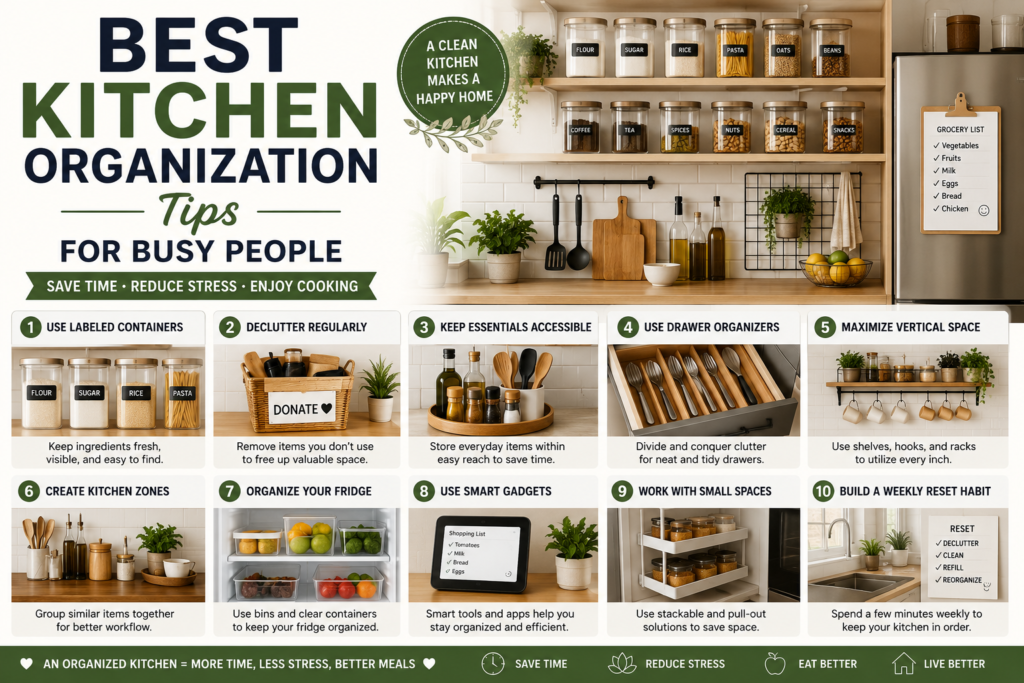
Best Kitchen Organization Tips for Busy People (2026 Guide)
Meta Description:
Discover the best kitchen organization tips for busy people in 2026. Learn smart storage ideas, decluttering hacks, and modern kitchen solutions to save time and reduce daily stress.
Best Kitchen Organization Tips for Busy People: Save Time, Reduce Stress, and Enjoy Your Kitchen More
Introduction
For many people, the kitchen is the busiest room in the home. It’s where meals are prepared, snacks are grabbed, and families often gather—but it can also become one of the most cluttered and stressful spaces.
If your kitchen feels disorganized, cooking becomes harder, cleaning takes longer, and daily routines feel more frustrating than they should.
The good news? You don’t need a complete renovation to create an efficient kitchen.
With a few smart organization strategies, you can turn even a small or busy kitchen into a functional, easy-to-manage space that saves you time every single day.
Whether you live in an apartment, a family home, or have a compact kitchen setup, these practical organization tips will help.
Why Kitchen Organization Matters
A well-organized kitchen does more than look good—it improves your entire routine.
Benefits include:
- faster meal prep
- easier cleaning
- less food waste
- reduced stress
- better use of small spaces
- improved cooking enjoyment
A functional kitchen helps you spend less time searching—and more time living.
1. Use Clear, Labeled Containers
One of the easiest upgrades is replacing mismatched packaging with uniform containers.
Perfect for:
- flour
- rice
- pasta
- snacks
- cereals
- spices
Benefits:
- easier to find ingredients
- prevents duplicate purchases
- keeps food fresher longer
- creates a clean, aesthetic look
Pro Tip: Use waterproof labels for a polished, Pinterest-worthy pantry.
2. Declutter Your Kitchen Regularly
Many kitchens become overcrowded with unused gadgets, expired food, and duplicate tools.
Ask yourself:
- Have I used this in the last 6 months?
- Do I own two of the same thing?
- Is this taking valuable space?
Declutter:
- old containers
- broken utensils
- expired spices
- unused appliances
Less clutter = more usable space.
3. Keep Everyday Essentials Within Reach
Your most-used items should be the easiest to access.
Keep close:
- cooking oils
- knives
- cutting boards
- coffee supplies
- favorite spices
- frequently used pots
Store less-used items higher or farther back.
This simple shift saves minutes every day.
4. Use Drawer Organizers
Messy drawers waste time.
Use dividers for:
- utensils
- measuring tools
- kitchen towels
- food wraps
- cutlery
Dedicated spaces reduce visual clutter and make everything easier to find.
5. Maximize Vertical Space
Modern kitchens are embracing vertical storage—especially in apartments and smaller homes.
Ideas:
- wall-mounted racks
- floating shelves
- hanging mugs
- magnetic knife strips
- over-cabinet storage
Think upward—not just outward.
6. Create Kitchen “Zones”
Professional kitchens use zoning—and it works at home too.
Create areas like:
- prep zone (knives, boards, bowls)
- cooking zone (pots, oils, spices)
- coffee zone (mugs, machine, pods)
- snack zone (kids or grab-and-go)
- cleaning zone (trash, cloths, soap)
This improves efficiency instantly.
7. Organize Your Refrigerator Smarter
A messy fridge leads to wasted food and unnecessary spending.
Try this:
- top shelf = leftovers
- middle = dairy & ready-to-eat foods
- bottom = raw meats
- drawers = fruits & vegetables
- door = condiments
Use clear bins for:
- snacks
- drinks
- meal prep
Label shelves if needed.
8. Use Smart Kitchen Gadgets
Today’s kitchens are becoming smarter—and more organized.
Helpful tools:
- smart pantry inventory apps
- label makers
- stackable containers
- pull-out shelves
- rotating lazy Susans
- digital grocery lists
Tech can save both time and money.
9. Make Small Kitchens Work Harder
Limited kitchen space? Focus on:
- foldable accessories
- stackable cookware
- under-sink organizers
- slim storage carts
- magnetic fridge shelves
Small kitchens can still be highly efficient.
10. Build a Weekly Reset Habit
Organization isn’t a one-time task—it’s a habit.
Spend 10–15 minutes weekly to:
- wipe shelves
- reorganize drawers
- toss expired food
- refill essentials
- reset countertops
Small maintenance prevents big messes.
Budget-Friendly Kitchen Organization Ideas
You don’t need expensive systems.
Affordable upgrades:
- storage bins
- tension rods
- hooks
- baskets
- mason jars
- reusable labels
Even small investments create noticeable results.
Common Kitchen Organization Mistakes to Avoid
Avoid:
- overbuying containers
- ignoring vertical space
- storing by size instead of function
- keeping too many “just in case” tools
- skipping regular maintenance
Simple systems work best.
Final Thoughts
An organized kitchen can completely change your daily routine.
It saves time, reduces stress, minimizes waste, and makes cooking more enjoyable.
Start with one area—your pantry, a drawer, or your countertop—and improve it step by step. Small changes lead to lasting habits and a kitchen that truly works for your lifestyle
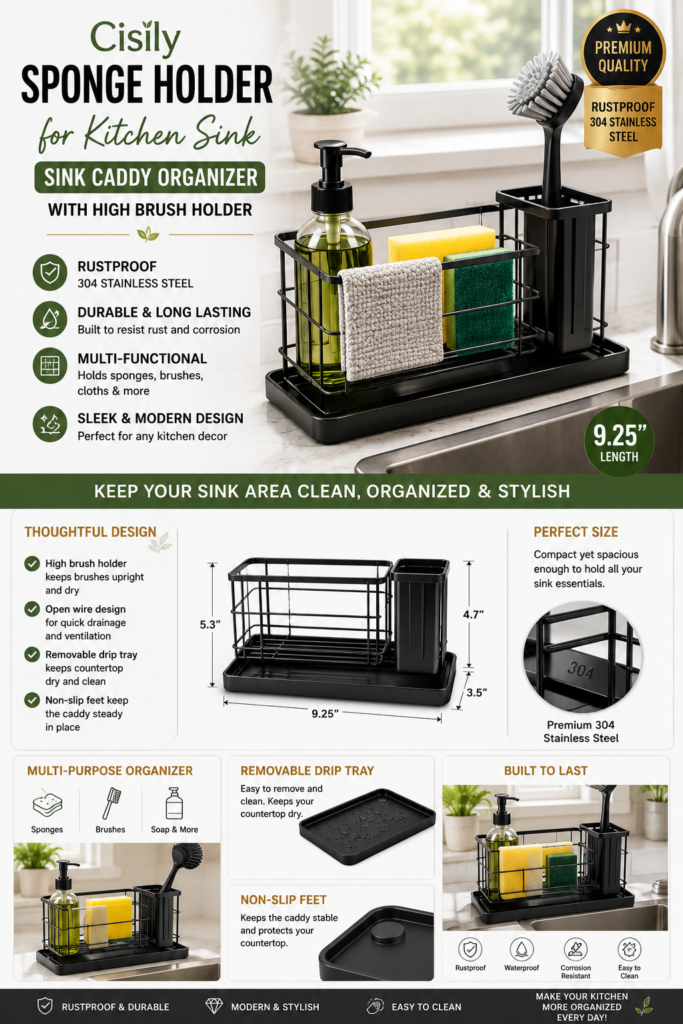
Best Kitchen Sink Organizer for a Clutter-Free Kitchen (2026)
The Cisily Sponge Holder for Kitchen Sink is a premium sink caddy organizer designed to keep your kitchen clean, organized, and clutter-free. Made from rustproof 304 stainless steel, this durable countertop organizer includes a high brush holder, removable drip tray, and compact 9.25-inch design—ideal for storing sponges, soap bottles, dish brushes, and cleaning cloths. Its modern black finish complements any kitchen decor while maximizing sink-side storage. A practical and stylish kitchen organization essential for homes in 2026.
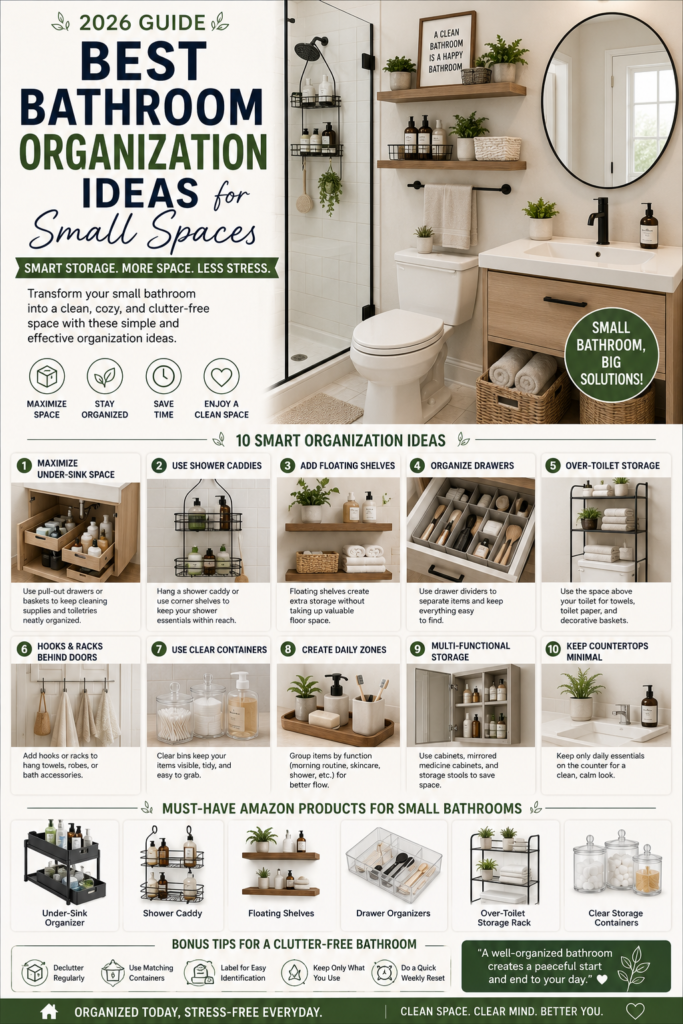
Best Bathroom Organization Ideas for Small Spaces (2026 Guide)
Meta Description:
Maximize bathroom storage with these smart bathroom organization ideas for small spaces. Discover stylish storage hacks, decluttering tips, and must-have Amazon organizers for a cleaner, more functional bathroom.
Best Bathroom Organization Ideas for Small Spaces: Smart Storage Solutions That Actually Work
Introduction
A small bathroom can quickly become one of the most cluttered spaces in your home. Between toiletries, towels, cleaning supplies, and daily essentials, limited storage can make even the most organized person feel overwhelmed.
The good news? You don’t need a large bathroom—or an expensive remodel—to create a clean, organized, and functional space.
With the right organization strategies, smart storage products, and a few design tricks, even the smallest bathroom can feel spacious, stylish, and easy to maintain.
Whether you live in an apartment, dorm, tiny home, or family house, these bathroom organization ideas will help you maximize every inch.
Why Bathroom Organization Matters
A well-organized bathroom improves more than appearance.
Benefits include:
- faster morning routines
- easier cleaning
- less stress
- more storage
- better use of small spaces
- reduced clutter
An organized bathroom feels more relaxing—and works better every day.
1. Maximize Under-Sink Storage
The area under your sink is often underused or overcrowded.
Instead of piling products randomly, use layered storage systems.
Best ideas:
- pull-out drawers
- stackable bins
- sliding organizers
- labeled baskets
Recommended affiliate product:
Under-Sink Organizer from Amazon
Why it works:
- doubles storage
- easier access
- hides visual clutter
2. Use Shower Caddies to Free Up Space
Your shower should feel clean—not crowded with bottles.
Use:
- hanging shower caddies
- corner shelves
- tension pole shower racks
Store:
- shampoo
- conditioner
- soap
- razors
Recommended affiliate product:
Rustproof Shower Caddy
Perfect for:
- renters
- apartments
- shared bathrooms
3. Add Floating Bathroom Shelves
Wall space is often wasted in small bathrooms.
Floating shelves create:
- extra storage
- decorative display space
- a modern look
Use them above:
- toilets
- sinks
- towel racks
Store:
- towels
- candles
- skincare
- baskets
Recommended affiliate product:
Floating Wall Shelves
4. Organize Drawers with Dividers
Bathroom drawers become chaotic fast.
Use drawer organizers for:
- makeup
- toothbrushes
- skincare
- hair accessories
Benefits:
- faster access
- less mess
- more usable space
Small upgrades create big improvements.
5. Use Over-the-Toilet Storage
The wall above your toilet is prime storage space.
Options:
- ladder shelves
- storage cabinets
- floating shelves
Ideal for:
- extra towels
- toilet paper
- decorative baskets
This is one of the easiest ways to gain storage without losing floor space.
6. Install Hooks Behind Doors
Doors are hidden storage opportunities.
Use adhesive hooks for:
- towels
- robes
- hair tools
- cleaning cloths
Best for renters because:
- no drilling required
- affordable
- easy to install
7. Use Clear Containers for Toiletries
Clear bins help you:
- see everything instantly
- avoid duplicate purchases
- keep categories organized
Store separately:
- skincare
- oral care
- makeup
- medicines
Label each bin for even better organization.
8. Create Daily-Use Zones
Group items by routine.
Example zones:
- morning routine (toothbrush, cleanser)
- shower routine
- makeup zone
- kids’ bathroom items
- guest supplies
This reduces decision fatigue and saves time.
9. Choose Multi-Functional Storage
Modern bathrooms benefit from furniture that does more.
Examples:
- mirrored medicine cabinets
- vanity stools with storage
- towel racks with shelves
- rolling carts
Perfect for:
- small apartments
- shared homes
- compact bathrooms
10. Keep Countertops Minimal
Cluttered counters instantly make bathrooms feel smaller.
Keep only:
- soap dispenser
- one tray
- one decorative item
Store everything else away.
Minimal surfaces create a luxury feel.
Trending Bathroom Organization Ideas for 2026
Current trends include:
- aesthetic acrylic organizers
- bamboo storage solutions
- sustainable reusable containers
- smart mirrors
- minimalist spa-style bathrooms
Today’s homeowners want function and style.
Budget-Friendly Bathroom Organization Upgrades
You don’t need expensive storage systems.
Affordable options:
- baskets
- adhesive shelves
- mason jars
- storage bins
- label stickers
Even a small budget can create a dramatic transformation.
Common Bathroom Organization Mistakes to Avoid
Avoid:
- overbuying organizers
- ignoring wall space
- storing expired products
- cluttered counters
- no weekly reset routine
Simple systems last longer.
Recommended Amazon Products for Small Bathrooms
Here are smart affiliate options to feature from Amazon:
- Under-sink organizer
- Rustproof shower caddy
- Floating bathroom shelves
- Drawer dividers
- Over-toilet storage rack
- Clear acrylic containers
Use “Check latest price” buttons for higher click-through rates.
Final Thoughts
A small bathroom doesn’t have to feel cramped or chaotic.
With smart storage, intentional organization, and a few affordable upgrades, you can create a bathroom that feels larger, cleaner, and more enjoyable to use every day.
Start with one area—your sink, shower, or countertop—and improve it step by step. Small changes can completely transform your space.
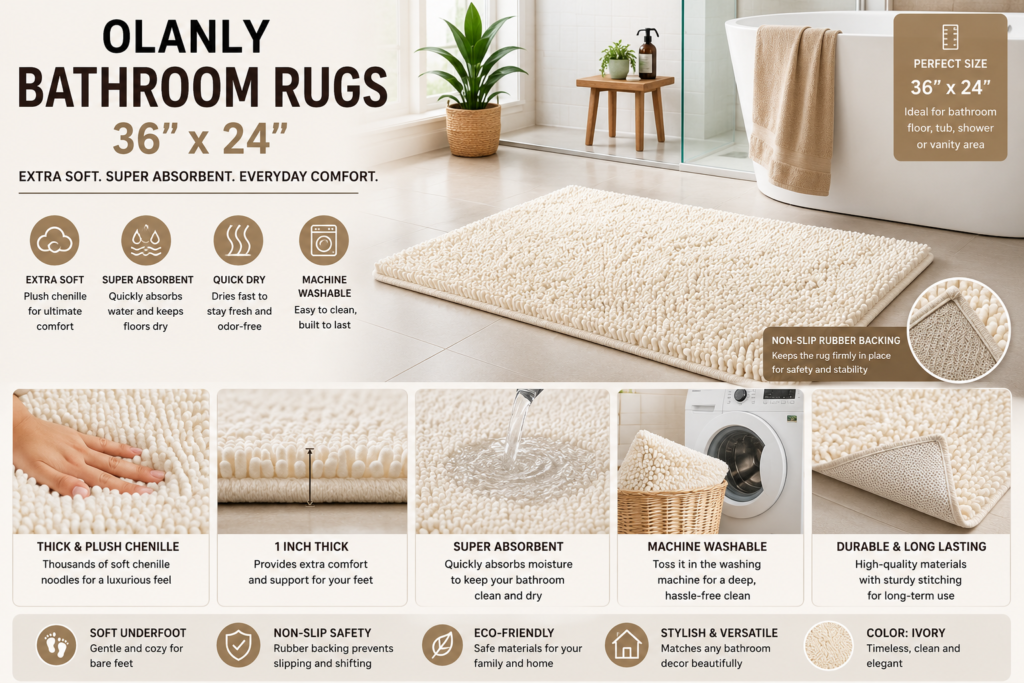
OLANLY Bathroom Rugs 36×24, Extra Soft Absorbent Chenille Bath Rugs, Rubber Backing Quick Dry, Machine Washable Bath Mats for Bathroom Floor, Tub and Shower, Home Decor Accessories.
Upgrade your bathroom with the OLANLY Bathroom Rug 36×24 — an extra soft chenille bath rug designed for comfort, quick drying, and everyday luxury. This super absorbent bathroom mat features non-slip rubber backing, is machine washable, and adds a clean modern touch to any bathroom decor. Perfect for bathrooms, tubs, showers, vanities, and small spaces. Save this for your next bathroom makeover or home decor upgrade in 2026.
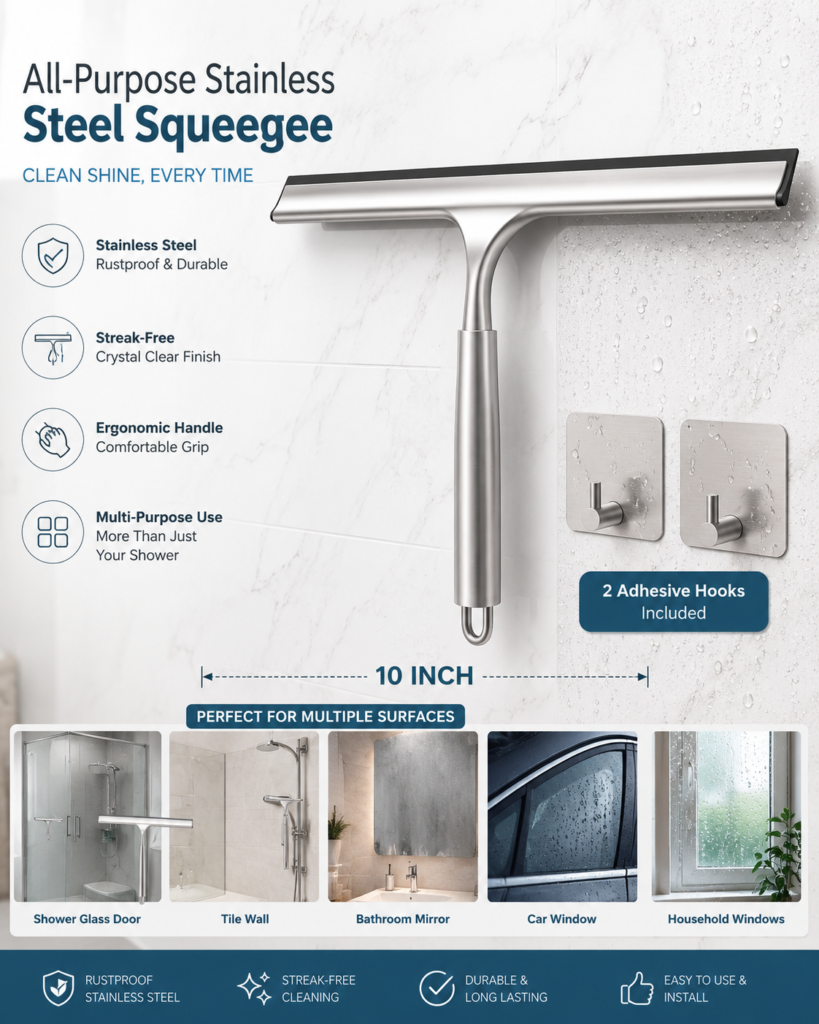
All-Purpose Stainless Steel Shower Squeegee with 2 Adhesive Hooks – 10” Streak-Free Glass, Mirror & Window Cleaner
Product Description
Keep your home spotless with this 10-inch stainless steel shower squeegee, designed for streak-free, squeak-free cleaning on shower glass doors, mirrors, windows, tile walls, and car windows. Made with rust-resistant stainless steel and a premium silicone blade, it delivers durable performance and effortless cleaning every time. Its ergonomic anti-slip handle ensures a comfortable grip, while 2 waterproof adhesive hooks provide convenient storage and quick access.
Key Features
✔ Streak-Free Cleaning – Removes water spots, soap scum, and buildup effortlessly.
✔ Premium Stainless Steel – Rustproof, durable, and built to last.
✔ Ergonomic Grip – Comfortable anti-slip handle for easy cleaning.
✔ Multi-Surface Use – Perfect for glass, mirrors, tiles, and car windows.
✔ Easy Storage – Includes 2 waterproof adhesive hooks.
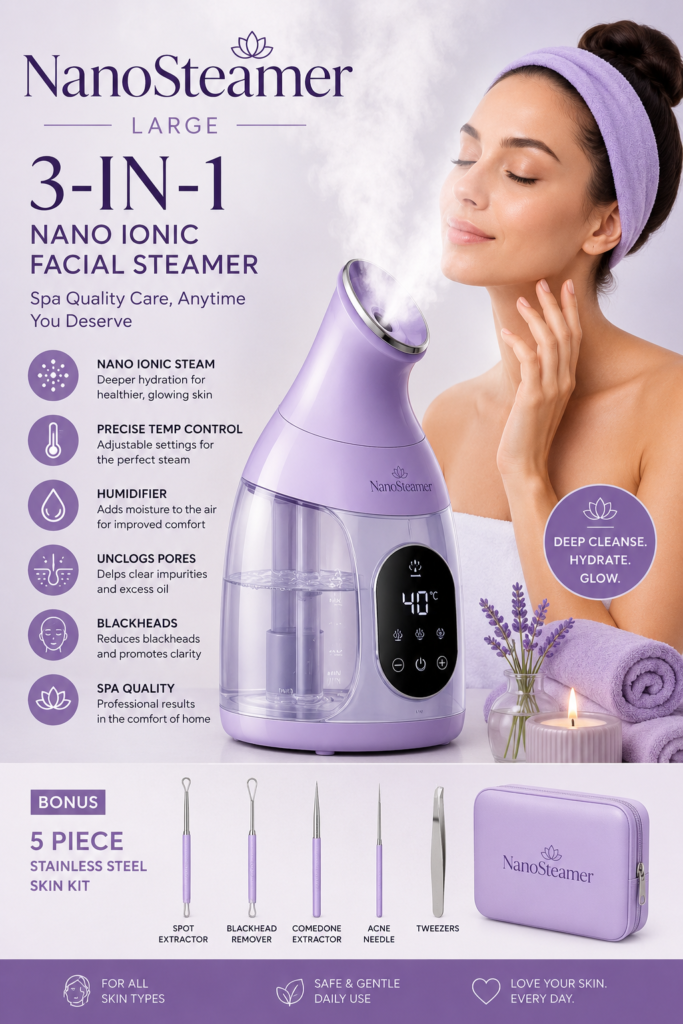
Transform your skincare routine with the NanoSteamer Large 3-in-1 Nano Ionic Facial Steame
Transform your skincare routine with the NanoSteamer Large 3-in-1 Nano Ionic Facial Steamer—a 3-in-1 nano ionic facial steamer, humidifier & towel warmer for deep pore cleansing, blackhead removal, and glowing skin. Features 10x deeper steam penetration, 200ml tank, 30-minute runtime, auto shut-off, plus a bonus 5-piece stainless steel skin kit. Perfect for spa-quality skincare at home. #FacialSteamer #SkincareRoutine #GlowingSkin #BeautyTools #HomeSpa
item details.
| Brand Name | Pure Daily Care |
|---|---|
| Model Name | PDC-NANO-5PC |
| Manufacturer | Pure Daily Care |
| UPC | 810016718154 810016719052 |
| Manufacturer Part Number | PDC-NANO-5PC-PR |
| Model Number | PDC-NANO-5PC-PR |
| Unit Count | 1 Count |
| Best Sellers Rank | #6,380 in Beauty & Personal Care (See Top 100 in Beauty & Personal Care)#1 in Facial Steamers |
features and specs
| Power Source | Corded Electric |
|---|---|
| Product Benefits | Improves skin hydration, unclogs pores, removes blackheads and blemishes, provides spa-quality home facial |
| Capacity | 200 ml |
| Skin Type | All |
| Runtime | 30 minutes |
Smart Doorbells: Why Every Modern Home Needs One in 2026
Discover why smart doorbells are becoming essential for modern homes in 2026. Learn their benefits, features, security advantages, and the best smart video doorbells to buy today
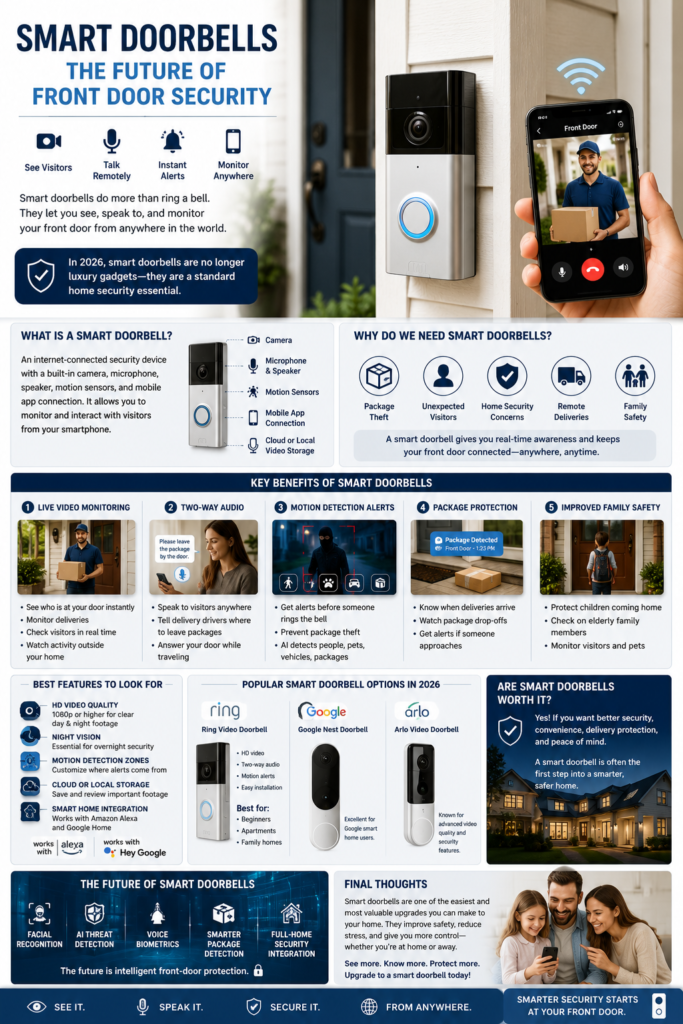
Smart Doorbells: The Future of Front Door Security
Introduction
Home security has changed dramatically in the last few years.
Traditional doorbells simply let you know someone is outside—but smart doorbells do much more. They let you see visitors, speak to them remotely, receive instant alerts, and monitor your front door from anywhere in the world.
Whether you’re at home, at work, or traveling, a smart doorbell gives you complete visibility and control over your front entrance.
In 2026, smart doorbells are no longer luxury gadgets—they are becoming a standard home security essential.
What Is a Smart Doorbell?
A smart doorbell (also called a video doorbell) is an internet-connected security device installed at your front door.
Unlike traditional doorbells, it includes:
- a built-in camera
- microphone and speaker
- motion sensors
- mobile app connection
- cloud or local video storage
This allows homeowners to monitor and interact with visitors directly from their smartphones.
Why Do We Need Smart Doorbells?
Today’s homes face more challenges than ever:
- package theft
- unexpected visitors
- home security concerns
- remote deliveries
- family safety
A smart doorbell solves these problems by giving you real-time awareness of what’s happening outside your home.
Even when you’re not there, your front door stays connected.
Key Benefits of Smart Doorbells
1. Live Video Monitoring
The biggest advantage is live video.
You can:
- see who is at your door instantly
- monitor deliveries
- check visitors in real time
- watch activity outside your home
This improves security and peace of mind.
2. Two-Way Audio Communication
Speak directly to visitors—even when you’re away.
Examples:
- tell a delivery driver where to leave a package
- speak to guests remotely
- answer your door while traveling
It’s like being home—even when you’re not.
3. Motion Detection Alerts
Modern smart doorbells detect motion before someone even rings the bell.
Benefits:
- alerts for suspicious activity
- package theft prevention
- visitor awareness
- improved nighttime security
Advanced models use AI to distinguish:
- people
- pets
- vehicles
- packages
4. Package Protection
Online shopping has increased package theft globally.
A smart doorbell helps you:
- know when deliveries arrive
- watch package drop-offs
- receive alerts if someone approaches
This is especially useful for frequent Amazon shoppers.
5. Improved Family Safety
Smart doorbells help protect:
- children arriving home
- elderly family members
- visitors
- pets
You always know who is outside before opening the door.
Best Features to Look for in a Smart Doorbell
When buying one, prioritize:
HD Video Quality
Look for:
- 1080p or higher
- clear day/night footage
Night Vision
Essential for overnight security.
Motion Detection Zones
Customize where alerts come from.
Cloud or Local Storage
Save important footage for review.
Smart Home Integration
Choose models compatible with:
- Amazon Alexa
- Google Home
Popular Smart Doorbell Options in 2026
Ring Video Doorbell
One of the most popular and beginner-friendly options.
Features:
- HD video
- two-way audio
- motion alerts
- easy installation
Best for:
- beginners
- apartments
- family homes
Google Nest Doorbell
Excellent for Google smart home users.
Arlo Video Doorbell
Known for advanced video quality and security features.
Are Smart Doorbells Worth It?
Yes—especially if you want:
- better security
- convenience
- delivery protection
- peace of mind
For many homeowners, a smart doorbell is the first step into smart home security.
Future of Smart Doorbells
Upcoming innovations include:
- facial recognition
- AI threat detection
- voice biometrics
- smarter package detection
- full-home security integration
The future is intelligent front-door protection.
Final Thoughts
Smart doorbells are one of the easiest and most valuable upgrades you can make to your home.
They improve safety, reduce stress, and give you more control—whether you’re at home or away.
If you’re starting your smart home journey, this is one of the best devices to begin with.
Smart Security Cameras: Why They Are Essential for Modern Homes in 2026
Description:
Discover why smart security cameras are essential for modern homes in 2026. Learn about their benefits, features, future innovations, and the best indoor and outdoor security camera systems for home protection.
Smart Security Cameras: The Future of Home Protection
Introduction
Home security has evolved far beyond traditional alarm systems and simple locks.
In today’s connected world, smart security cameras are becoming one of the most important tools for protecting homes, families, businesses, and personal property. These intelligent devices provide real-time monitoring, instant alerts, cloud storage, and remote access directly from your smartphone.
Whether you are at work, traveling, or relaxing at home, smart security cameras help you stay connected to what matters most.
In 2026, smart cameras are no longer considered luxury technology—they are quickly becoming a standard feature in modern homes.
What Are Smart Security Cameras?
Smart security cameras are internet-connected surveillance devices designed to monitor indoor and outdoor areas in real time.
Unlike traditional CCTV systems, modern smart cameras offer:
- mobile app access
- AI-powered motion detection
- cloud video storage
- two-way communication
- smart home integration
- high-definition video quality
These features allow homeowners to monitor their property from anywhere in the world using their smartphones or tablets.
Why Smart Security Cameras Matter More Than Ever
The way people live has changed dramatically in recent years.
Online shopping, remote work, and increased digital connectivity have also created new security concerns, including:
- package theft
- unauthorized visitors
- property damage
- break-ins
- monitoring children or pets at home
Smart security cameras provide peace of mind by helping homeowners stay aware of what’s happening around their property at all times.
They are no longer just security tools—they are becoming part of everyday smart living.
Benefits of Smart Security Cameras
1. Real-Time Home Monitoring
One of the biggest advantages is the ability to monitor your home live from anywhere.
You can:
- check your front door
- monitor your backyard
- watch deliveries arrive
- supervise children or pets
- view activity while traveling
This creates a strong sense of control and security.
2. Instant Mobile Alerts
Modern cameras send notifications directly to your smartphone when motion is detected.
This allows you to react immediately to:
- suspicious movement
- unexpected visitors
- package deliveries
- unusual nighttime activity
Advanced systems even identify:
- people
- animals
- vehicles
- packages
using artificial intelligence.
3. Enhanced Night Vision
Security is especially important at night.
Most modern smart cameras now include:
- infrared night vision
- color night vision
- enhanced low-light recording
This ensures clear footage even in complete darkness.
4. Cloud Recording and Video Storage
Smart cameras can store footage securely in the cloud or on local storage devices.
Benefits include:
- reviewing past events
- saving evidence if needed
- accessing recordings remotely
- continuous monitoring history
Cloud recording prevents footage loss if the camera is damaged or stolen.
5. Two-Way Audio Communication
Many smart cameras include built-in microphones and speakers.
This allows you to:
- speak to visitors remotely
- communicate with delivery drivers
- warn suspicious individuals
- check on family members
It’s an extra layer of convenience and safety.
Indoor vs Outdoor Security Cameras
Indoor Security Cameras
Indoor cameras are perfect for:
- monitoring pets
- checking on children
- elderly care
- apartment security
- monitoring specific rooms
They are usually smaller, sleek, and designed to blend into home interiors.
Outdoor Security Cameras
Outdoor cameras focus on:
- entry points
- driveways
- garages
- gardens
- perimeter monitoring
They are built to handle:
- rain
- heat
- dust
- extreme weather conditions
Many include floodlights and advanced motion sensors.
Important Features to Look For
When choosing smart security cameras, prioritize the following:
HD Video Quality
Look for:
- 1080p minimum
- 2K or 4K for sharper detail
Higher resolution improves facial recognition and license plate visibility.
Wide Viewing Angles
Wider angles cover more space and reduce blind spots.
Smart Motion Detection
AI-powered alerts help reduce false alarms from pets or moving trees.
Mobile App Compatibility
Choose systems with reliable apps for:
- live streaming
- notifications
- remote control
Smart Home Integration
Many cameras work with:
- Amazon Alexa
- Google Home
- smart displays
- automation systems
Recommended Smart Security Camera
Arlo Pro
One of the most popular smart security cameras for modern homes.
Key Features:
- crystal-clear HD video
- advanced night vision
- cloud recording
- smart motion alerts
- weather-resistant design
- wireless setup
Best For:
- indoor and outdoor use
- beginners
- family homes
- apartment monitoring
Its user-friendly design and advanced security features make it a top choice for homeowners in 2026.
Smart Security Camera Trends in 2026
The future of security technology is rapidly evolving.
Emerging innovations include:
- facial recognition
- AI threat analysis
- voice recognition
- smart package monitoring
- automated emergency response
- solar-powered cameras
Future smart homes will rely heavily on predictive security systems that react before threats escalate.
Are Smart Security Cameras Worth It?
For most homeowners, the answer is yes.
Benefits include:
- increased safety
- reduced stress
- better property protection
- remote awareness
- family monitoring
- theft prevention
Even a single camera can significantly improve home security.
Common Mistakes to Avoid
Avoid:
- poor camera placement
- weak Wi-Fi signals
- ignoring privacy settings
- skipping firmware updates
- buying low-resolution cameras
Quality and proper setup matter.
Final Thoughts
Smart security cameras are one of the best investments you can make for your home in 2026.
They provide convenience, security, peace of mind, and real-time awareness—whether you are home or away.
As technology continues to evolve, smart cameras will become even more intelligent, more accessible, and more important in everyday life.
If you’re building a safer smart home, a reliable security camera system is one of the best places to start.